Pancreatic Cysts
Pancreatic cysts are fluid-filled lesions that are often discovered unexpectedly during a scan performed for another reason. Most pancreatic cysts are benign or have a very low risk of becoming cancerous.
The important first step is to determine what type of cyst you have and whether it has any features that require closer monitoring or further investigation.
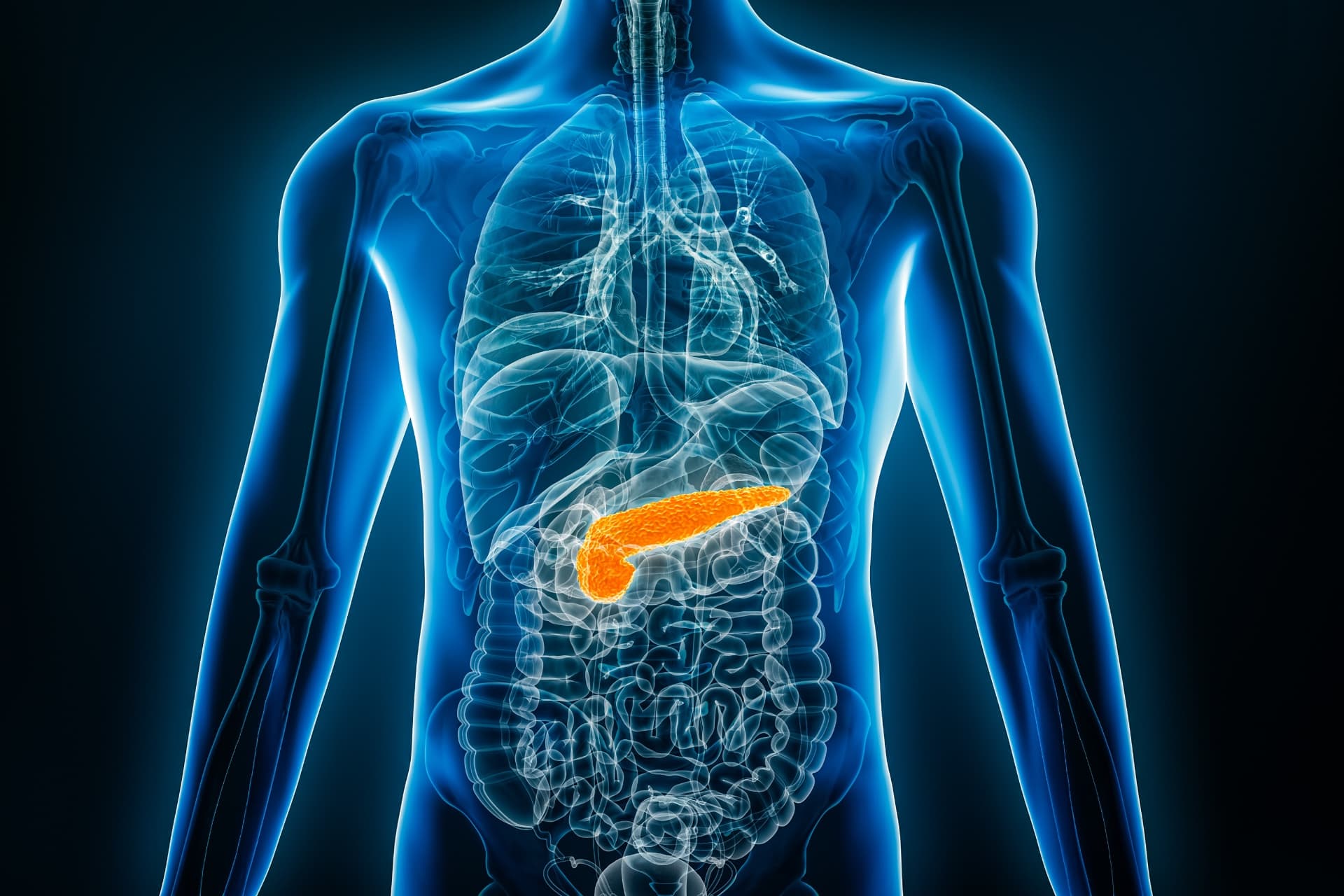
Understanding Pancreatic Cysts
Pancreatic cysts are fluid-filled sacs within the pancreas. They are found in approximately 2-3% of abdominal imaging studies and become more common with age. The key challenge is distinguishing benign cysts from those with malignant potential, as some can progress to pancreatic cancer if left untreated.
Accurate characterisation requires a combination of imaging, cyst fluid analysis, and clinical assessment. Dr. Prem, a Pancreatic Cysts Specialist, offers comprehensive evaluations based on the latest international guidelines to determine optimal surveillance intervals or intervention needs.
Common Types of Pancreatic Cysts
Pancreatic cysts are not all the same. Identifying the type helps determine whether simple monitoring is enough or whether further assessment is needed.
Serous cyst (SCA)
Almost always harmless. Usually just watched over time.
Mucinous cyst (MCN)
Small risk of change over time. May need monitoring or, rarely, removal.
IPMN (a type of cyst connected to the pancreatic duct)
Risk varies. Most are low-risk but need regular check-ups.
Pseudocyst (from past pancreatitis)
Not a true cyst — harmless and often goes away on its own.
Solid pseudopapillary neoplasm (SPN)
Rare. Usually recommended for removal in otherwise healthy patients.
Which Features Matter?
Most cysts remain low risk. The features below help determine whether routine surveillance, closer monitoring or prompt specialist assessment is appropriate.
Reassuring features
A small, simple and stable cyst without a solid component, significant pancreatic duct enlargement or meaningful growth over time is generally reassuring.
Typical approach: routine surveillance.
Features needing closer monitoring
These findings do not necessarily mean cancer, but they may justify shorter surveillance intervals or additional assessment with EUS.
- Cyst size ≥3 cm
- Thickened or enhancing cyst wall
- Main pancreatic duct 5-9 mm
- Non-enhancing mural nodule
- Abrupt change in duct calibre with distal atrophy
- Lymphadenopathy
- Elevated CA 19-9 levels
- Rapid cyst growth (>5 mm in 2 years)
Features needing prompt specialist assessment
These findings do not automatically mean cancer, but they usually require further assessment and sometimes surgical review.
- Obstructive jaundice with cystic lesion in pancreatic head
- Enhancing solid component within cyst
- Main pancreatic duct ≥10 mm
MRI / MRCP or Endoscopic Ultrasound?
Both tests are useful, but they answer different questions. MRI/MRCP is usually the main surveillance test, while EUS provides a closer look when more detail is needed.
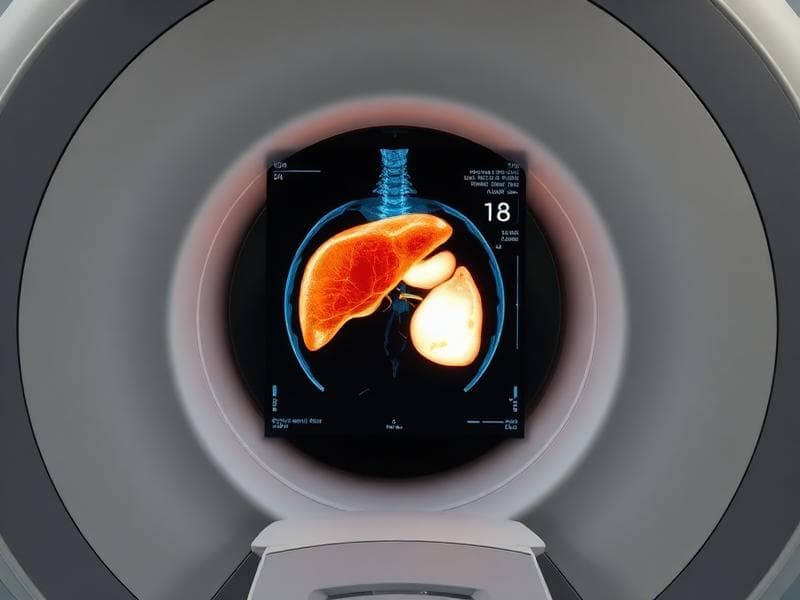
MRI / MRCP
Best for: routine surveillance and assessing the whole pancreas and pancreatic ducts.
What happens: you lie in an MRI scanner while detailed images are taken.
Radiation: none.
Main advantage: excellent non-invasive monitoring of cyst size and change over time.
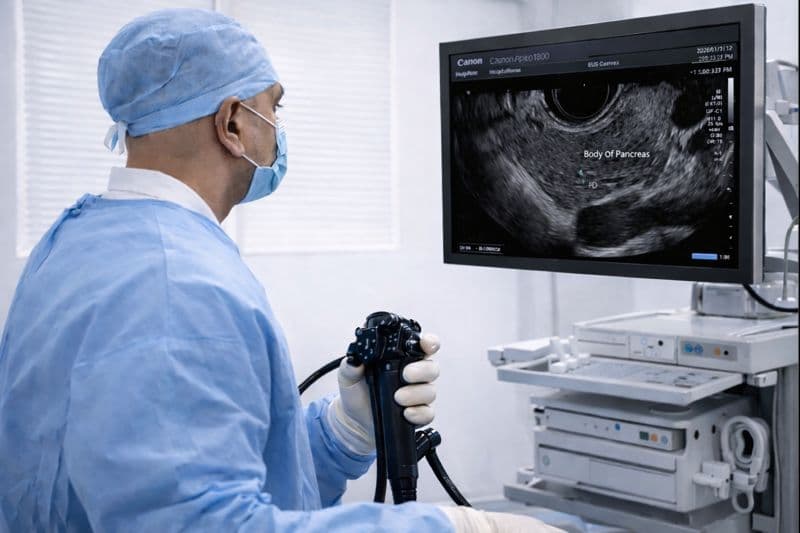
Endoscopic Ultrasound (EUS)
Best for: examining a cyst in greater detail when MRI shows something uncertain or concerning.
What happens: a flexible endoscope containing an ultrasound probe is passed through the mouth while you are sedated.
Radiation: none.
Main advantage: close-up imaging with the option to sample cyst fluid or tissue when needed.
For many low-risk cysts, MRI/MRCP is sufficient. EUS is generally reserved for cysts that require closer assessment.
How Are Pancreatic Cysts Monitored?
Surveillance depends first on the type of pancreatic cyst. The size of the cyst, changes over time and the presence of concerning features then help determine how often imaging is required and whether further assessment with endoscopic ultrasound (EUS) or surgical review should be considered.
Branch-duct IPMN
Usually monitored with MRI/MRCP according to its size, stability and risk features. Larger or changing IPMNs may require closer surveillance or EUS.
MCN and other cystic neoplasms
Management depends on the cyst type, size, symptoms and concerning features. Some can be monitored, while others are better assessed for surgery.
Benign or non-neoplastic cysts
A confidently diagnosed asymptomatic serous cystadenoma generally does not require the same long-term surveillance as an IPMN. Pseudocysts are followed according to the underlying pancreatitis and any complications.
When Might Surgery Be Considered?
Most pancreatic cysts do not require surgery.
Surgical assessment may be considered when a cyst develops higher-risk features, causes symptoms, progressively enlarges, or belongs to a cyst type where the long-term cancer risk may outweigh the risks of surgery.
Being referred to a pancreatic surgeon does not necessarily mean you need an operation. It allows the risks of continued surveillance and surgery to be considered together.
Frequently Asked Questions
Clinical Management of Pancreatic Cysts
Dr. Prem provides comprehensive evaluation and ongoing surveillance of pancreatic cysts, using the latest international guidelines to ensure safe, evidence-based care.
Related Conditions
You may also be interested in learning about these related conditions.